IDD
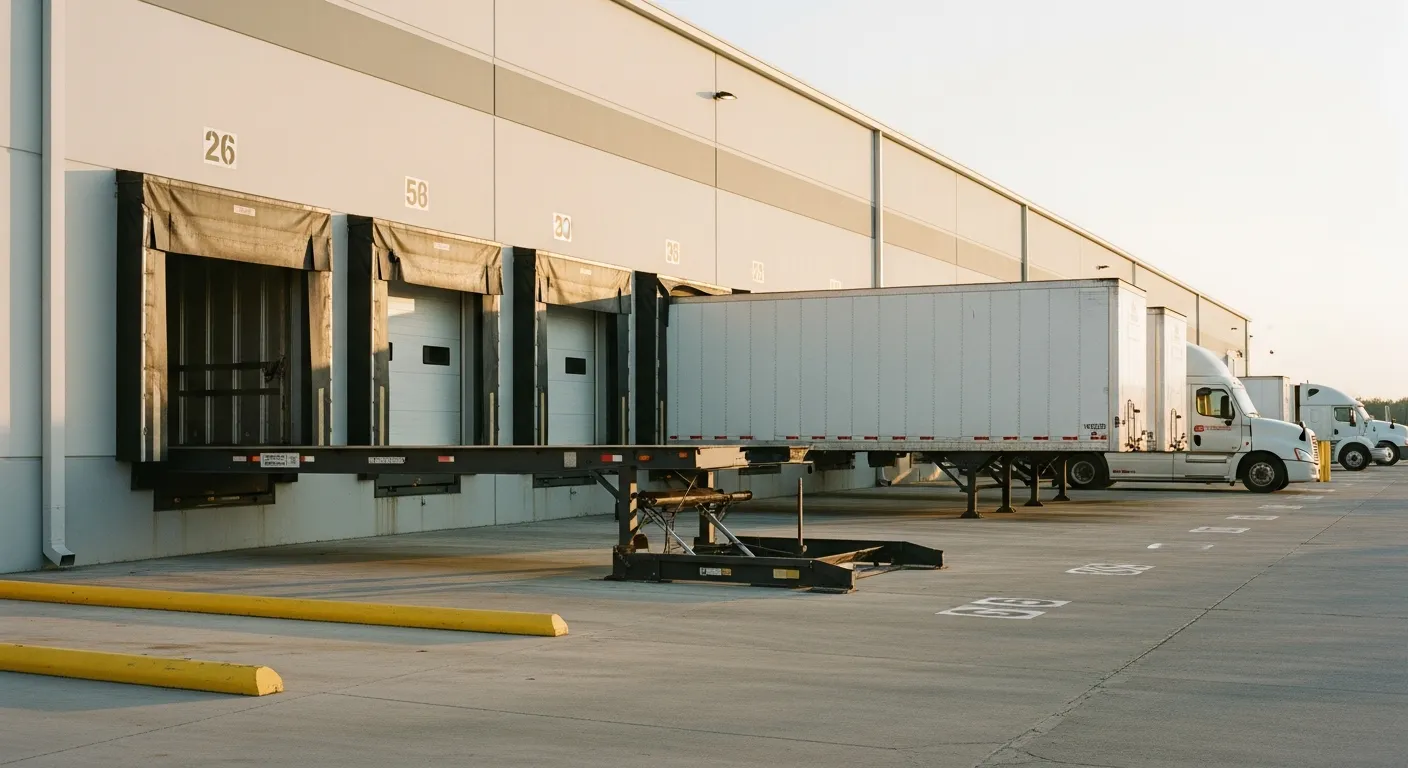
Commercial loading dock with semi trailer and warehouse overhead door at a Columbus, Ohio distribution facility

Columbus & Central Ohio · Commercial Service Request Line

Commercial Loading Dock & Overhead Door Repair in Columbus, Ohio.

A commercial-only service request line for Central Ohio facilities. Submit your facility, equipment, and urgency, and your request is routed to a local commercial dock and door provider when service area, equipment capability, and schedule line up — with the provider, ETA, and rate structure confirmed before dispatch.

  • Commercial Facilities Only
  • ·
  • Columbus & Central Ohio
  • ·
  • Dock Leveler & Warehouse Door Requests
  • ·
  • Provider Details Confirmed Before Dispatch

Scope

What We Service — and What We Don't.

Commercial dock and door work has a specific scope. Filtering at intake means your request reaches a provider who actually does the work you need.

Handled

We handle commercial requests for

  • Commercial loading dock equipment
  • Dock levelers and edge-of-dock levelers
  • Commercial overhead doors
  • Industrial roll-up doors
  • Warehouse sectional doors
  • High-speed fabric and rigid doors
  • Trailer restraints and dock safety equipment
  • Dock seals, shelters, and bumpers
  • Cooler / freezer / temperature-sensitive facility doors

Out of Scope

We do not handle

  • Residential garage doors
  • Home garage door springs
  • Home garage door openers
  • Boat docks and marina docks
  • Dock construction over water
  • DIY parts-only requests
  • Storefront glass or automatic pedestrian doors
  • Residential handyman work
  • Automotive glass or sliding doors

If you operate a commercial or industrial facility in the Columbus area and have a dock or door problem, you are in the right place. If you are a homeowner with a garage door issue, please contact a residential garage door company instead.

Service Requests

Commercial Door & Dock Equipment Service Requests.

01

Loading Dock Repair

Request service for hydraulic, mechanical, air-powered, and vertical-storing dock levelers, edge-of-dock levelers, and the controls and safeties that go with them. Photos of the leveler nameplate help the dispatched provider arrive prepared.

02

Dock Leveler Repair

Request service for failed lift cylinders, leaking pumps, broken lip assemblies, sagging decks, bent push rods, and seized roller assemblies on commercial dock levelers. Brand and model details speed up parts confirmation.

03

Commercial Overhead Door Repair

Request service for commercial sectional overhead doors — broken springs, cables, panels, hinges, rollers, jackshaft and trolley operators, and photo-eye safeties. Sectional door scope only — not residential garage doors.

04

Industrial Roll-Up Door Repair

Request service for rolling steel service doors and sheet doors used at warehouses, fleet shops, and storage facilities. Includes drum, brackets, slats, bottom bars, locks, and hoist or motor operators.

05

High-Speed Door Repair

Request service for high-speed fabric and rigid roll-up doors used in distribution, cold storage, and clean manufacturing. Brand, model, and a brief failure description help the provider confirm parts and controls.

06

Warehouse Door Repair

Request service for the full mix of warehouse doors found in Class A and Class B distribution buildings — sectional, sheet, rolling steel, insulated, and high-speed — including operator, control, and safety scope.

07

Trailer & Vehicle Restraints

Request service for trailer restraints, wheel-based restraints, and rotating-hook restraints integrated with dock leveler control panels and communication lights. Brand and signal-light details help the provider scope the visit.

08

Dock Seals & Shelters

Request service for foam dock seals, head-curtain shelters, dock shelters, dock bumpers, and bollards. Photos of damage and trailer wear patterns help the provider quote replacement vs. repair.

Talk to intake now

Have your facility address, equipment type, and urgency ready.

(614) XXX-XXXXCommercial Service Line

Service Area

Serving Columbus & Central Ohio Industrial Corridors.

Commercial dock and door service requests are accepted across the Columbus metro and the surrounding Central Ohio industrial corridors. Provider availability for any specific facility depends on capacity, equipment type, urgency, location, and facility-specific requirements.

  • Columbus

    Franklin County

  • Groveport

    Franklin County

  • Obetz

    Franklin County

  • Lockbourne

    Franklin County

  • Grove City

    Franklin County

  • Hilliard

    Franklin County

  • Dublin

    Franklin County

  • New Albany

    Franklin County

  • Gahanna

    Franklin County

  • Westerville

    Franklin County

  • Reynoldsburg

    Franklin County

  • Canal Winchester

    Franklin County

  • Pickerington

    Fairfield County

  • Pataskala

    Licking County

  • Newark

    Licking County

  • Circleville

    Pickaway County

Operating outside this list? Call to have the request reviewed for service-area fit. Coverage depends on the dispatched provider's normal service territory.

Industrial Corridors

Major Industrial Corridors We Serve.

COR-01

Rickenbacker / Groveport / Obetz / Lockbourne Corridor

Air cargo, intermodal, and major distribution facilities along the Rickenbacker International Airport logistics zone and the Norfolk Southern intermodal terminal — heavy dock-door cycle counts and high seasonal volume.

COR-02

Licking County / New Albany / Etna / Pataskala / Newark Corridor

Major distribution and manufacturing growth corridor with substantial Class A warehouse construction along the I-70 east spine. Mixed sectional, high-speed, and roll-up door inventories.

COR-03

Pickaway County / Commercial Point / Ashville / Circleville Corridor

Industrial growth corridor south of Columbus with significant 2024–2025 absorption. Newer dock equipment with manufacturer warranties still in play, plus older retrofitted facilities.

COR-04

Grove City / West Columbus / I-270 / I-70 Corridor

Established distribution and warehouse zone west of downtown Columbus. Long-tenured facilities with mixed-vintage dock leveler and overhead door inventories that benefit from preventive maintenance request planning.

COR-05

Hilliard / Dublin / West Jefferson / Madison County Corridor

Mixed manufacturing and distribution facilities west and northwest of Columbus. Includes Class A logistics product, light manufacturing, and food-grade facilities with cold-storage door scope.

COR-06

Gahanna / Reynoldsburg / East Columbus Corridor

Established business parks and light industrial properties on the east side of the I-270 loop. Smaller-bay dock counts but consistent commercial overhead door and roll-up service request volume.

How the request line works

A Commercial-Only Intake Process for Dock & Door Problems.

Commercial-Only Filtering

Residential garage door requests, boat dock requests, and storefront pedestrian door requests are screened out at intake. That keeps commercial dock and door providers from being routed work outside their scope and keeps your request in the right queue.

Equipment-Specific Intake

Intake collects equipment type, brand, model, age, failure description, and urgency before routing. The more specific the intake, the faster a provider can confirm fit, ETA, and parts availability before they roll a truck.

Provider Fit Before Dispatch

A request is only routed to a provider when service-area, equipment capability, and schedule line up. You should never be left waiting on a truck that was never going to show up because the work was outside the provider's scope.

ETA and Rate Confirmation

ETA window and the provider's rate structure are confirmed with you before dispatch. Pricing is set by the dispatched provider — but you see it in advance, not as a surprise on an invoice.

Insurance and COI Requests

Certificates of insurance, additional-insured endorsements, and other facility paperwork can be requested as part of intake. Insurance documentation belongs to the dispatched provider and is shared on request, not published as a marketing claim.

Clear Exclusions

If a request is outside scope — residential garage door, boat dock, automatic pedestrian door, glass storefront, parts-only DIY — that is communicated up front so you can find the right type of contractor without losing time on the wrong queue.

Who calls this line

Built for Commercial Operations.

Distribution Centers & 3PLs

High-cycle dock equipment under constant trailer turnover. Levelers, restraints, seals, and overhead doors absorb the wear; downtime translates directly to missed appointments and detention exposure.

Manufacturing Facilities

Plant doors, freight doors, high-speed doors between production cells, and dock equipment supporting raw-material and finished-goods flow. Outage on any of them stalls the line.

Cold Storage & Food Distribution

Insulated overhead doors, freezer doors, cooler doors, and high-speed doors maintain temperature integrity and FSMA-relevant facility conditions. Door issues are food-safety issues.

Logistics & Trucking Terminals

LTL terminals and cross-dock operations live or die on dock leveler and door uptime. Restraints, communication lights, and seals all play into safe trailer turnover.

Retail & Grocery Distribution

Grocery DCs, retail RDCs, and last-mile facilities with mixed ambient, refrigerated, and frozen dock zones. Each zone has its own door spec and failure profile.

Automotive / Fleet & Body Shops

Service bay roll-up doors, fleet shop sectional doors, and dealership receiving doors. Daily open-close cycles wear cables, springs, rollers, and operator components.

Self-Storage & Commercial Storage

Commercial storage facilities with rolling steel doors, sheet doors, and access control. Damage, jam, and operator failures impact rentals and customer access.

Municipal & Government Facilities

Public works garages, fleet maintenance buildings, fire stations, and municipal warehouse facilities with bid-eligible commercial dock and door scope.

Process

What Happens When You Call.

  1. 01

    Commercial Intake

    Call or submit the form. Intake collects facility name and address, primary contact and phone, equipment type, a brief failure description, and urgency. This is the step where commercial vs. residential is confirmed.

  2. 02

    Equipment Details

    Helpful details include brand, model, approximate age, and one or two photos — especially of the equipment nameplate, control box, and the failure itself. The more specific the intake, the better the provider can scope.

  3. 03

    Provider Fit and Availability

    Your request is reviewed for service-area fit, equipment fit, urgency, and provider availability. Before dispatch you can confirm who is performing the work, the ETA window, the rate structure, and any insurance or facility-onboarding documentation.

  4. 04

    Service, Quote, Repair, or Next Step

    The provider arrives, diagnoses, and explains the repair path. Pricing is confirmed before work begins. If a part has to be ordered, you get a clear next step. Documentation is provided per the provider's normal process.

Ready to start intake

Call now and we'll move straight into equipment details.

(614) XXX-XXXXCommercial Service Line

Equipment Coverage

Common Brands and Equipment Types.

Dock Equipment

Hydraulic dock levelers, mechanical dock levelers, air-powered levelers, vertical-storing levelers, edge-of-dock levelers, vehicle restraints, trailer restraints, dock seals, dock shelters, dock bumpers, bollards, control boxes, communication lights, and dock safety equipment. Service requests typically start with the leveler nameplate and the control box photo.

Door Types

Commercial sectional doors, insulated overhead doors, sheet doors, rolling steel service doors, rolling fire doors, high-speed fabric doors, high-speed rigid doors, freezer doors, cooler doors, warehouse doors, and security doors. Brand, model, and a brief failure description are usually enough to confirm whether the dispatched provider stocks the right parts.

Operators & Controls

Jackshaft operators, trolley operators, hoist operators, high-cycle commercial openers, photo-eye safeties, pull-cord switches, push-button stations, and programmable controllers. Operator and control failures are common drivers of dock-door downtime; isolating the failure to opener vs. door body speeds up dispatch.

Brands referenced at intake

  • Rite-Hite
  • Serco
  • Kelley
  • McGuire
  • Pentalift
  • Blue Giant
  • Nordock
  • Poweramp
  • Overhead Door Corporation
  • Raynor
  • Wayne Dalton Commercial
  • CornellCookson
  • Albany
  • Rytec
  • Hörmann
  • ASSA ABLOY

FAQ

Answers Before You Call.

Q01

Do you service residential garage doors?

No. This service request line is for commercial and industrial facilities only — distribution centers, warehouses, manufacturing plants, cold storage, 3PLs, retail distribution, fleet shops, and similar operations. Homeowners with a residential garage door issue should contact a residential garage door company instead. Requests for residential garage doors, openers, or springs are not routed to commercial dock and door providers.

Q02

Are you a commercial dock and door contractor?

Columbus Dock Door Repair operates as a commercial-only service request line. Requests are routed to a local commercial dock and door provider when one is available and the request fits the provider's service area, equipment capability, and schedule. The eventual provider performs the work under their own license, insurance, and documentation, and those details are confirmed with you before any dispatch occurs.

Q03

How fast can someone respond to an emergency dock door repair in Columbus?

Response time depends on provider availability, location within Central Ohio, time of day, equipment type, parts requirements, and site access. For urgent commercial requests, call with the facility address, equipment type, and a brief failure description so availability and an ETA can be confirmed before dispatch. We do not publish a fixed response-time guarantee because real availability varies — what we do is collect the right details up front so the provider can give you an honest window.

Q04

What areas around Columbus are covered?

Service requests are accepted across the Columbus metropolitan area and the Central Ohio industrial corridors, including Columbus, Groveport, Obetz, Lockbourne, Grove City, Hilliard, Dublin, New Albany, Gahanna, Westerville, Reynoldsburg, Canal Winchester, Pickerington, Pataskala, Newark, and Circleville. Facilities outside these areas are welcome to call so the request can be reviewed for service-area fit. Coverage of any specific facility depends on the dispatched provider's normal service territory.

Q05

What equipment can I request service for?

Commercial and industrial dock and door equipment: hydraulic and mechanical dock levelers, edge-of-dock levelers, vehicle and trailer restraints, dock seals, dock shelters, dock bumpers, commercial sectional overhead doors, insulated overhead doors, sheet doors, rolling steel service doors, rolling fire doors, high-speed fabric and rigid doors, freezer and cooler doors, warehouse doors, and the operators, controls, and safeties associated with them. If your equipment is commercial and you are not sure whether it fits, call and describe it.

Q06

What dock leveler brands can be handled?

Service requests reference the major commercial dock equipment brands found in Central Ohio facilities, including Rite-Hite, Serco, Kelley, McGuire, Pentalift, Blue Giant, Nordock, and Poweramp. Brand and model details help the dispatched provider arrive prepared with the right parts and documentation. If you do not know the brand, photos of the leveler nameplate and control box are usually enough to identify it.

Q07

Do you handle high-speed doors?

Yes — service requests for commercial high-speed doors are accepted, including high-speed fabric roll-up doors and high-speed rigid doors used in distribution, cold storage, and manufacturing environments. Common brands include Rytec, Albany, Hörmann, and ASSA ABLOY. High-speed doors are specialized; brand, model, and a brief failure description help the provider confirm whether they carry the right parts and controls.

Q08

Can you help with rolling fire doors or NFPA 80 drop-test issues?

Rolling fire door service requests, including annual NFPA 80 drop-test work, are accepted and routed to providers who handle that scope. Documentation and inspection paperwork are issued by the dispatched provider per their normal process. When calling, mention that the request involves a rated fire door so the provider can confirm capability and scheduling before dispatch.

Q09

Are providers licensed and insured?

Commercial dock and door work is performed by the dispatched provider, who carries their own license and insurance under their own business. Insurance documentation, certificates of insurance, and additional-insured endorsements can be requested from the provider as part of the intake process and confirmed before dispatch. We do not publish a specific insurance dollar amount because that figure belongs to the eventual provider and is shared on request.

Q10

Do you offer preventive maintenance programs?

Preventive maintenance requests for commercial dock equipment, overhead doors, and high-speed doors are accepted and routed to providers who run PM programs. The provider sets the visit frequency, scope, checklist, and pricing based on your facility, equipment count, and usage. For multi-site or multi-equipment PM, share the equipment list and locations during intake so the provider can scope and quote it properly.

Q11

What does commercial dock door repair cost?

Commercial dock and door repair is quoted by the dispatched provider based on equipment type, failure mode, parts, labor hours, travel, and any after-hours or emergency factors. Pricing is confirmed before work begins; you should not expect to be billed for a repair you have not authorized. Published flat rates are not used because real commercial dock work varies too much by equipment and site condition for a single number to be honest.

Q12

What information should I have ready when I call?

Have these ready: facility name and address, contact name and direct phone, equipment type (loading dock leveler, overhead door, roll-up, high-speed, dock seal, restraint, etc.), brand and model if known, a brief description of what is failing, urgency (down now / today / this week / planned), and one or two photos if possible. The more specific the intake, the faster a provider can confirm fit, ETA, and pricing before dispatch.

Final Step

Request Commercial Loading Dock or Warehouse Door Service.

This line is for commercial and industrial facilities in Columbus and Central Ohio with a dock or door problem. It is not for residential garage doors, boat docks, or storefront pedestrian doors. Submit your facility, equipment, and urgency, and the request is routed to a local commercial provider when fit and availability line up.

Commercial service requests · Columbus & Central Ohio · Provider details confirmed before dispatch

Reference

Commercial Dock & Door Service in Columbus: What Facility Managers Need to Know.

The Columbus Industrial Landscape

Central Ohio is one of the most active industrial real-estate markets in the Midwest. The Rickenbacker logistics zone, the I-70 east corridor through Licking County, the I-71 south spine through Pickaway County, and the long-tenured west and northwest corridors around I-270 all carry meaningful concentrations of distribution, manufacturing, cold storage, 3PL, and grocery facilities. That activity translates into a lot of dock leveler cycles, a lot of overhead door cycles, and a lot of high-speed door cycles per day per building. The equipment that handles those cycles eventually fails — that is the entire reason a commercial dock and door service request line exists.

Common Commercial Dock Leveler Problems

On hydraulic dock levelers, the most common service requests involve weakened or leaking lift cylinders, sluggish lip cylinders, contaminated hydraulic fluid, and worn or torn weather seals around the deck. On mechanical levelers, broken or fatigued main springs, hold-down failures, and worn lip latches are typical. On both styles, bent push rods, sheared roller pins, and corroded deck plates show up after years of trailer impact and freeze-thaw cycles. Edge-of-dock levelers see lip-hinge wear, deformation under heavy loads, and frame damage from misaligned trailers.

Common Commercial Overhead Door Problems

Commercial sectional doors fail in patterns that are different from residential doors. Torsion springs sized for high-cycle commercial duty break under load when their cycle count is exceeded, and replacing a single broken spring without rebalancing the door is rarely the right answer. Cables fray and snap, hinges and rollers wear, panels are bent by truck impact, and bottom-bar assemblies are damaged at dock height. Operators — jackshaft, trolley, and hoist styles — fail at contactors, sprockets, brake assemblies, and limit switches. Photo eyes, pull cords, and push-button stations are common small-part failures that take a door out of service.

High-Speed Door and Cold-Storage Door Issues

High-speed fabric doors are a different animal: torn curtains, misaligned bottom bars, broken side guides, motor and brake failures, and control-board faults are typical. They are speced for high cycle counts, but a forklift hit or a miscommunicated truck approach can take one out instantly. Cold storage and freezer doors carry insulation, gasket, and heater-wire considerations that change parts and labor scope — moisture management and temperature integrity matter as much as the mechanical fix.

Trailer Restraints and Dock Safety Equipment

Trailer restraints — wheel-based and rotating-hook styles — are interlocked with dock leveler control panels and exterior communication lights. When a restraint fails, the entire interlock and signal sequence has to be diagnosed, not just the restraint itself. Dock seals and shelters wear at the head curtain and side pads from repeated trailer contact and are commonly torn during off-angle approaches. Bumpers disintegrate under impact and need replacement before trailer damage starts hitting the dock face itself.

Why Photos Help

Photos at intake are the single highest-leverage thing a facility manager can do to speed up dispatch. A photo of the equipment nameplate identifies brand, model, and serial. A photo of the failure narrows the parts list. A photo of the control box and any visible operator labels tells the provider which controller family is in play. When intake has photos, the dispatched provider arrives prepared, and the first-trip outcome improves dramatically — without making any guarantee about a specific first-trip-fix rate.

Columbus and Central Ohio Service Requests

The right way to use this line is the simple way. Call or submit the form with the facility address, the equipment type, the failure description, and the urgency. Add brand, model, and photos if you have them. Confirm provider, ETA, and rate structure before dispatch. The line itself does not perform the work — a local commercial dock and door provider does — but the intake, fit, and pre-dispatch confirmation steps are where most of the wasted time on commercial repair requests gets eliminated.

Commercial service only — no residential garage doors.